Postgraduate Study Day
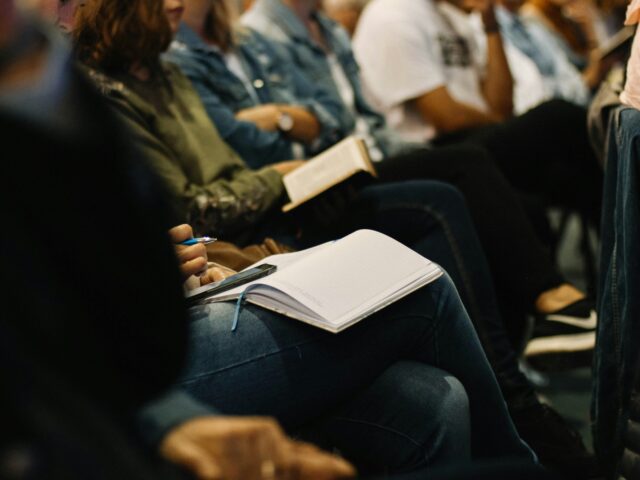
The Association organises an annual Postgraduate Study Day in collaboration with the Society for the Study of French History (SSFH). This is an occasion to share your work in a relaxed, convivial setting, meeting other postgraduate researchers and senior academics in the fields of modern and contemporary French studies and French historical studies. The programme also includes a roundtable discussion on career development, with the opportunity to discuss your research and gain valuable insight from experts working in and beyond academia. We also work closely with other organisations, such as the Society for French Studies (SFS) and the Association des études françaises et francophones d’Irlande (ADEFFI), offering a programme of training sessions and reading aimed at postgraduates throughout the academic year.
Resonances and Dissonances – ILCS, London, 10 April 2026
Resonances and dissonances: moments of echo and reverberation, rupture and interruption. In the increasingly fractured contemporary world, these competing, overlapping, and often incongruous concepts invite renewed attention to how past events, ideas, and practices continue to shape the present. Resonance, in this sense, functions not merely as retrospective recognition but as a mode of historical cognition, shaping how individuals, communities, and institutions understand and respond to cultural and political events. Dissonance, by contrast, may emerge from closeness to difference or from similarity, challenging assumptions about continuity and coherence. Resonances and dissonances are now, more than ever, a dynamic central to the ways we might grapple with the conditions of modernity and its aftermaths.
Papers might consider how resonances and dissonances function historically, informing societies, groups, and individuals; how postcolonial histories and legacies reshape the resonances of the French language; how literary and philosophical texts from Mallarmé to Duras, from Glissant to Mbembe, register the tension between fragmentation and continuity. What does it mean for two things to resonate? To what extent are resonances a product of retrospective interpretation? How is dissonance generated? Is it born of similarity, difference, or their interaction? We invite participants to consider some of these questions and more through their work at our study day.
2025: RUPTURE(S) - University of Cambridge
2024: JO2024 - Representing the Nation - Online
2023: Conflict and Opposition - Online
2022: Images - Past and Present - Online
2021: (im)mobilisations - Online
2020: Breaking Silences - Queen's University Belfast
2019: Visibility/Invisibility - All Souls (Oxford)
2018: Conflict - Institute of Modern Languages Research (London)
2017: Mobility/Immobility - University of Nottingham
2016: Patrimoine - Queen Mary, University of London
2015: The Global and the Local - University of Exeter
2014: Commemoration - Newcastle University
2013: Impact - University of Warwick
2012: Futures - University of Sheffield