Publications
2012

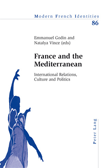
France and the Mediterranean:International Relations, Culture and Politics
Emmanuel Godin / Natalya Vince (eds)
This multidisciplinary edited volume examines wide-ranging exchanges between France and its Mediterranean neighbours and their impact. It questions the changing notion of a Mediterranean space and its representation, centrality and relevance in terms of France's international relations under Sarkozy's presidency, from the launch of the Union for the Mediterranean and its complex articulations with the European Union's own agenda in the region, to the tortuous relations with Libya, made even more complicated by the 2011 'Arab Spring'. Beyond the realm of state relations and formal policy networks, the volume examines the crucial role played by diasporas, the interplay between postcolonial and transnational representations in the fields of cultural diplomacy, cinema and architecture, and considers how these can produce merged or hybrid identities. Later in the collection, the politics of ethnicity in post-war France, the interplay between negative perceptions of Islam and the changing memory of the Algerian War, and the evolution of Franco-Algerian relations since 1962 are used to question the weight of the colonial past when analysing the relations between France and North Africa.

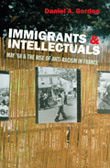
Immigrants & Intellectuals: May '68 & the Rise of Anti-Racism in France
Daniel A. Gordon
This book tells, for the first time, the full story of the rise and fall of a cycle of protest movements for the rights of migrant workers from 1961 to 1983. Based on more than a decade of research in France, including special access to normally closed police archives, it reveals an encounter between two worlds, the immigrant and the intellectual.

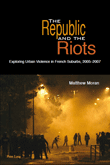
The Republic and the Riots: Exploring Urban Violence in French Suburbs, 2005-2007
Matthew Moran
In 2005, the deaths of two teenagers in Clichy-sous-Bois provoked three weeks of rioting in French banlieues. This book takes the reader inside the world of the banlieues and explores the nature and causes of the riots. Drawing on qualitative fieldwork conducted in Villiers-le-Bel, the author offers a unique insight into the motivating factors behind the violence. On a larger scale, the book examines the relationship between the underprivileged suburbs and the French republican model. The author explores a triad of interconnections: between republican ideals and the reality of daily life in the banlieues; between national projections of unity and localized realities of disunity; and between figures of authority and ordinary citizens.
2011

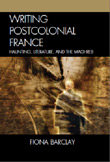
Writing Postcolonial France: Haunting, Literature, and the Maghreb
Fiona Barclay
This book examines the way in which France has failed to come to terms with the end of its empire, and is now haunted by the legacy of its colonial relationship with North Africa. It examines the form assumed by the ghosts of the past in fiction from a range of genres (travel writing, detective fiction, life writing, historical fiction, women's writing) produced within metropolitan France, and assesses whether moments of haunting may in fact open up possibilities for a renewed relational structure of cultural memory. By viewing metropolitan France through the prism of its relationship with its former colonies in North Africa, the book maps the complexities of contemporary France, demonstrating an emerging postcoloniality within France itself.

France in the Age of Organization - Factory, Home and Nation from the 1920s to Vichy
Jackie Clarke
In interwar France, there was a growing sense that 'organization' was the solution to the nation's perceived social, economic and political ills. This book examines the roots of this idea in the industrial rationalization movement and its manifestations in areas as diverse as domestic organization and economic planning. In doing so, it shows how experts in fields ranging from engineering to the biological sciences shaped visions of a rational socio-economic order from the 1920s to Vichy and beyond.

Contemporary France
Helen Drake
An accessible interdisciplinary introduction to contemporary France providing coverage of culture, society, economy, and politics set in a historical and global context. A central theme is the relationship between popular images of France and the often contradictory realities of French society as it faces up to the challenges of the 21st century.
More details

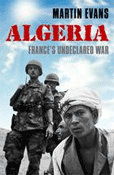
Algeria:France's Undeclared War
Martin Evans
The depth and scale of the colonization process explains why the Algerian War of 1954 to 1962 was one of the longest and most violent of the decolonization struggles. An undeclared war in the sense that there was no formal beginning of hostilities, the war produced huge tensions that brought down four governments, ended the Fourth Republic in 1958, and mired the French army in accusations of torture and mass human rights abuses. In carefully re-examining the origins and consequences of the conflict, Martin Evans argues that it was the Socialist led Republican Front, in power from January 1956 until May 1957, which was the defining moment in the war. Predicated on the belief in the universal civilizing mission of the Fourth Republic, coupled with the conviction that Algerian nationalism was feudal and religiously fanatical in character, the Republican Front dramatically intensified the war in the spring of 1956.
Drawing upon previously classified archival sources as well as new oral testimonies, this book underlines the conflict of values between the Republican Front and Algerian nationalism, explaining how this clash produced patterns of thought and action, such as the institutionalization of torture and the raising of pro-French Muslim militias, which tragically polarized choices and framed all subsequent stages of the conflict.
More details

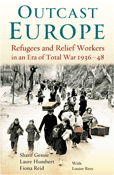
Outcast Europe: Refugees and Relief Workers in an Era of Total War 1936-48
Sharif Gemie, Fiona Reid, Laure Humbert, and with Louise Ingram
The period of the ‘long’ Second World War (1936-1948) was marked by mass movements of diverse populations: 60 million people either fled or were forced from their homes. This book considers the Spanish Republicans fleeing Franco’s Spain in 1939, the French civilians trying to escape the Nazi invasion in 1940, and the millions of people displaced or expelled by the forces of Hitler’s Third Reich. Throughout this period state and voluntary organisations were created to take care of the homeless and the displaced. National organisations dominated until the end of the war; afterwards, international organisations – the United Nations Relief and Rehabilitation Agency and the International Refugee Organisation - were formed to deal with what was clearly an international problem. Using case studies of displaced people and of relief workers, this book is unique in placing such crises at the centre rather than the margins of wartime experience, making the work nothing less than an alternative history of the Second World War.

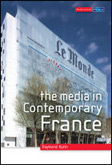
The Media in Contemporary France
Raymond Kuhn
The Media in Contemporary France analyses the role of the main news media - press, radio, television and the internet - in one of the world's major democracies. Written by a leading specialist in the field, it covers media policy, news management and image projection during the mediatized 'hyperpresidency' of Nicolas Sarkozy.

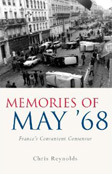
Memories of May '68
Chris Reynolds
This book sheds new light on one of the most significant periods in recent French history, the student revolts of May 1968. Focussing on the portrayal of these events during the subsequent decennial commemorations, Chris Reynolds analyzes the construction of the history of 1968. By highlighting the paradox between the plethora of existing material on 1968 and the relatively narrow frame through which the year's events are viewed, Reynolds raises complex issues concerning the gap between memory and history.
2010

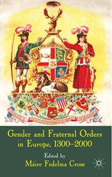
Gender and Fraternal Orders in Europe, 1300-2000
Edited by Máire Fedelma Cross
What have medieval nuns, parrot shooting, Freemasonry, and Shetland revelry got in common? The essays in this volume demonstrate recent scholarship on monastic orders, guilds, men and women Freemasons and friendly societies over centuries and across frontiers in Europe. Written by scholars from interdisciplinary backgrounds, they provide new insights into their contribution to the gendering of public space and the evolution of 'separate spheres'.

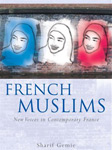
French Muslims - New Voices in Contemporary France
Sharif Gemie
The debate concerning Muslims and the contemporary world has attracted the attentions of many commentators. French Muslims by Dr Sharif Gemie is an analysis of Muslim opinions and experiences in France, which has the largest Muslim population in Europe.
2009

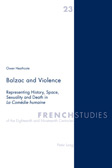
Balzac and Violence - Representing History, Space Sexuality and Death in La Comédie humaine
Owen Heathcote
Violence is one of the main themes in the novels of Honoré de Balzac. Executions, murders, savagery and death accompany the conspiracies and the turbulence that characterise his post-Revolutionary times, from the Terror to the Napoleonic campaigns and then to the upheavals of 1830 and 1848. Despite the importance of violence in Balzac, this is the first book-length study of the topic.